
Fortified Spaces · Design & Build

Fortified Spaces

Safe rooms, hardened bedrooms, hidden storage, and Faraday spaces – built into the home you already live in. Strength hidden in plain sight, so your house still feels like home until the moment you need it to do more.


What We Mean By “Fortified Spaces”

A Fortified Space is a room or zone inside your home that has been quietly upgraded to give you more time, more control, and better options when something goes wrong – without turning your house into a bunker.

  • From the outside, it looks like a normal room, closet, or hallway.
  • Inside, the framing, door sets, hardware, and layout are doing a very different job.
  • Every build is anchored to your threat level, your family, and your budget – not a generic kit.

We start with how you actually live: where you sleep, where your kids are, how you move at night, and what you’d realistically do in the first 30–90 seconds of a bad situation.

Types Of Fortified Spaces We Build

Different homes and families need different solutions. These are the most common patterns.
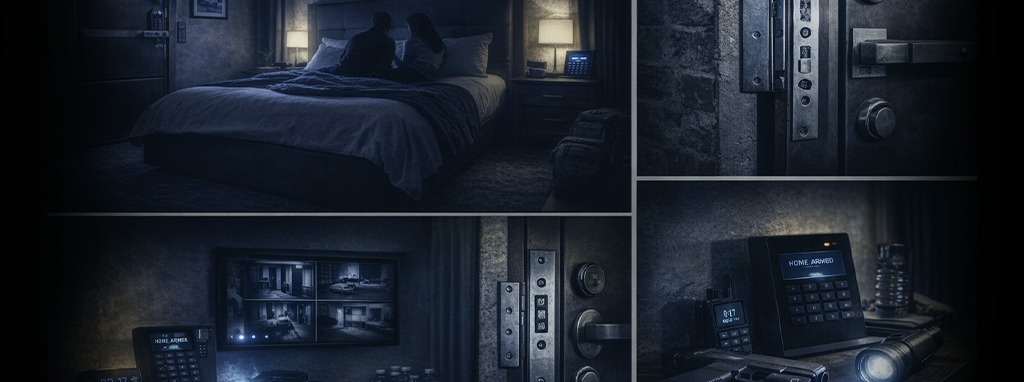
Hardened Bedrooms

Hardened Bedrooms Web 1

Your primary sleeping space upgraded to buy you time and protect who matters most.
  • Reinforced door frames, strikes, and hinges.
  • Improved core walls and anchoring where it counts.
  • Sightlines and locking logic that favour you, not a threat.
  • Clean finishes so it still feels like a bedroom, not a vault.

Dedicated Safe Rooms

Dedicated Safe Rooms Web 1

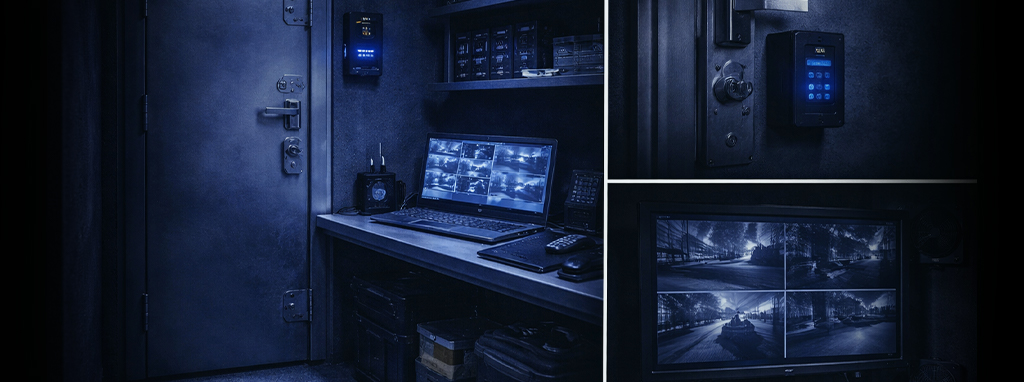
A room you move to intentionally when you need the strongest protection in the house.
  • Door sets and hardware designed to resist forced entry.
  • Interior layout that supports sheltering in place.
  • Power, ventilation, and communication considerations.
  • Integration with alarms, cameras, or comms (if present).

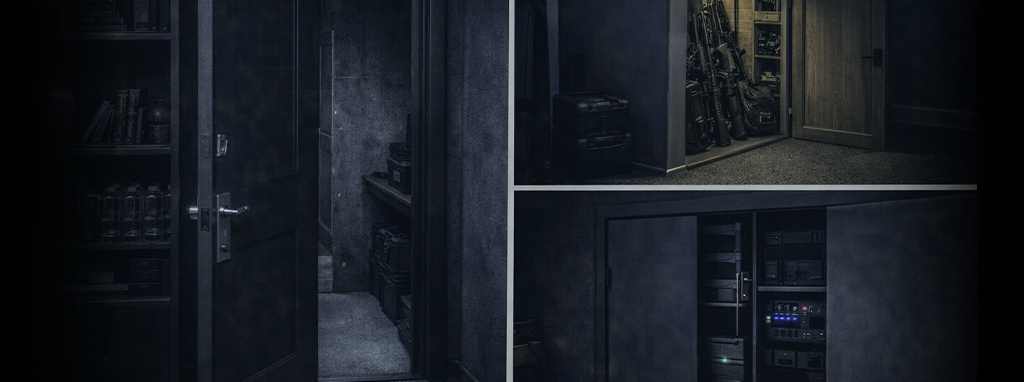
Hidden Rooms & Passages

Hidden Rooms Passages Web 1

Spaces that are hard to discover quickly – for people, gear, or sensitive items.

  • Concealed entries disguised as cabinetry or wall panels.
  • Use of existing closets, under-stair spaces, or dead zones.
  • Options for quick-close vs “never noticed” access.
  • Designed around your local codes and structural reality.

Faraday & Signal-Controlled Rooms

Faraday Signal Controlled Rooms Web 1 1

Spaces designed to reduce or block wireless signals and outside electronic noise.
  • Concept-level Faraday treatment for key walls or zones.
  • Controlled charging / device storage areas.
  • Integration with privacy-focused routines and habits.

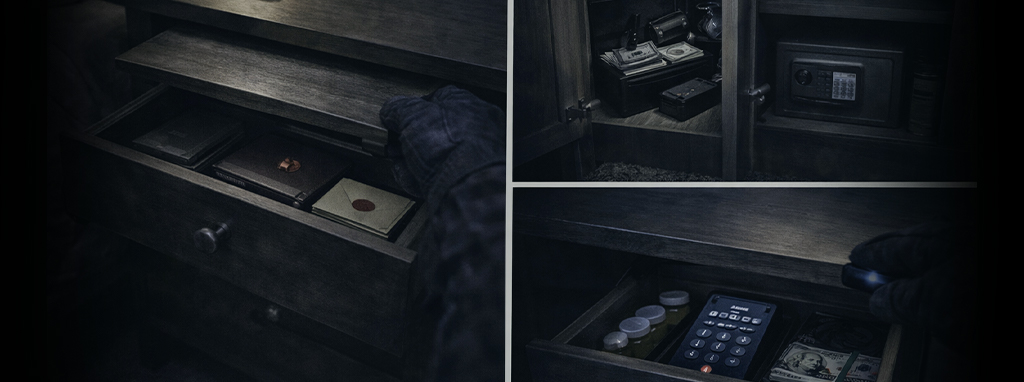
Hidden Storage & Compartmentry

Hidden Storage Compartmentry Web 1

Built-in or furniture-based hiding points for critical items and documents.
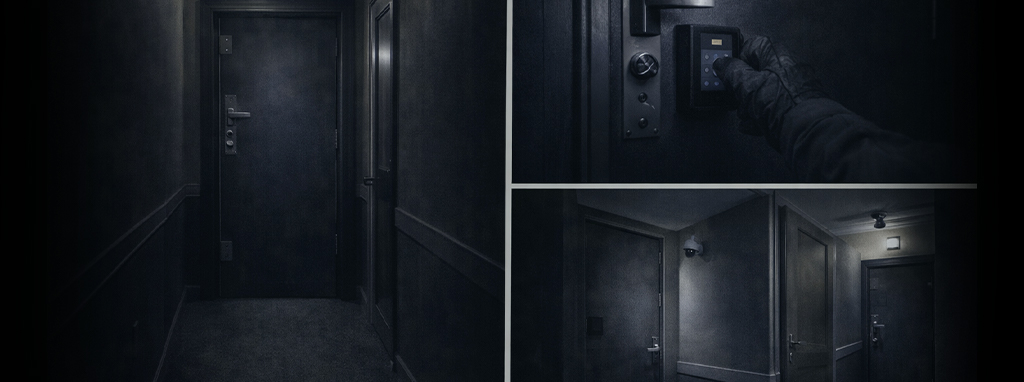
  • Concealed compartments within cabinets or millwork.
  • Options that pair with RFID or keyed access.
  • Thought-through placement tied to your drills and routines.

Layered Hallways & Chokepoints

Layered Hallways Chokepoints Web 1

Strategic reinforcement of hallways or transitions to slow movement.

  • Doors and frames positioned to create controlled chokepoints.
  • Better use of existing walls and corners.
  • Designed to work with, not against, family movement.

How We Design & Build Fortified Spaces

This is not a catalogue item. It’s a design process anchored to your home, your risk, and how you actually live.

  • Threat & Lifestyle Call. We talk through your concerns, family structure, routines, and the kind of incident you’re planning against.
  • On-Site Walkthrough. We look at candidate rooms, hallways, and structural realities, plus how you move at night and under stress.
  • Concept & Options. We sketch 1–3 concept paths: minimal upgrades, mid-range, and full build-out where appropriate.
  • Detailed Scope. Once you pick a path, we define materials, hardware, and phasing so the work can be done cleanly.
  • Build & Handoff. We complete or oversee the work, then walk you through how to use the space and how it fits into your drills.

What You Get With a Fortified Space

  • Clear design intent: what the space is supposed to do and for how long.
  • Hardware and structural upgrades chosen for your threat level.
  • Finishes that keep the room feeling like part of your home.
  • Integration with ARX assessments, drills, and technical sweeps.
  • Notes you can share with insurers, trusted trades, or legal counsel if needed.
 
 Typical project length

How We Design & Build Fortified Spaces

Structural First

Paint and trim come last. We start with frames, anchors, hinges, fasteners, and how loads travel through the structure when someone tries to force a door or wall.

  • Reinforced frames and strike zones.
  • Appropriate use of steel, composites, and fasteners.
  • Attention to surrounding walls and weak flanking points.

Discreet By Default

The less attention a Fortified Space draws in normal life, the better. We design so guests barely notice anything different unless they know what to look for.

  • Standard-looking door slabs and trim where possible.
  • Hardware that doesn’t scream “vault.”
  • Noise and vibration considerations.

Usable Under Stress

In a bad moment, you don’t have time for complex sequences. We favour simple, repeatable actions over clever but fragile tricks.

  • Clear open/close and lock/unlock logic.
  • Support for drills and muscle memory.
  • Consideration for kids and guests in the home.

Who Fortified Spaces Are For

Not every home needs a Fortified Space. For some families, though, it’s the missing layer between “basic locks” and “we have to move.”

  • Families who want a clear, defensible place to rally in a worst-case scenario.
  • People in high-conflict separations or targeted harassment situations.
  • Business owners or public-facing individuals with elevated risk.
  • Homeowners who already have firearms or critical assets and want better physical control around them.

The point is not to live in fear. The point is to know that if the one night you never wanted actually comes, there is a room or route in your home that was built for that night – not just for the brochure photos.
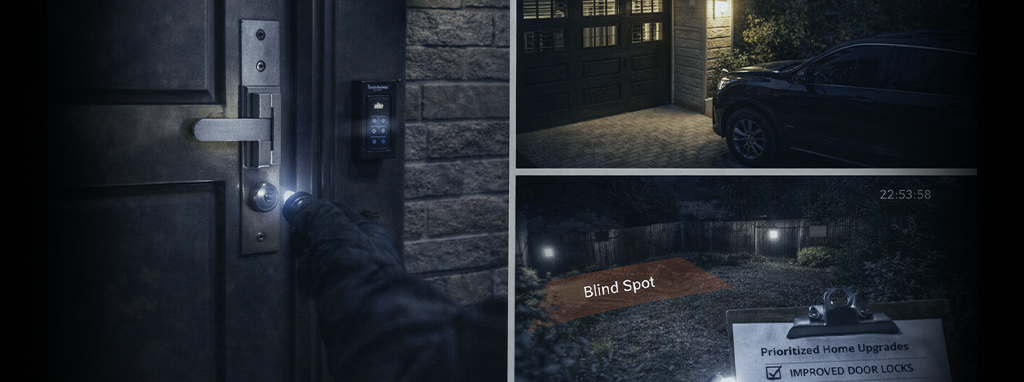
Built On Top of Solid Assessment ​

150-Point Assessment

150 Point Assessment Web 3 1

Most Fortified Spaces start here. We identify where your home is strong, where it’s soft, and which room or hallway is the best candidate for reinforcement.
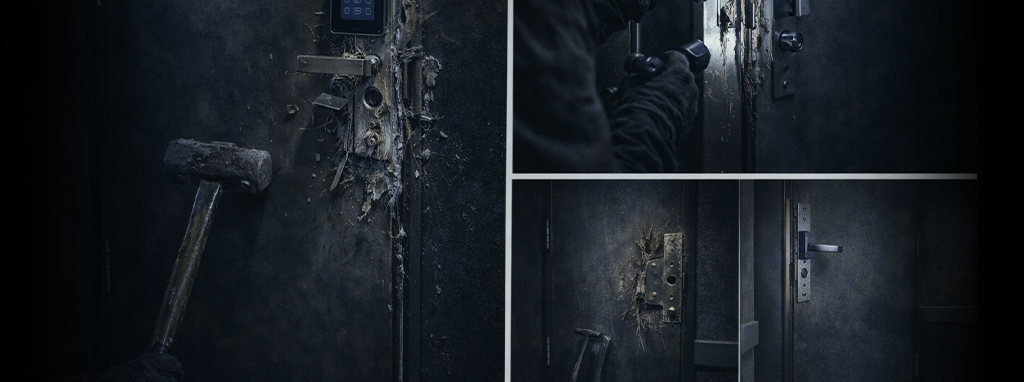
  • Maps current breach points and likely paths.
  • Helps choose the right room or zone.
  • Informs how much reinforcement you really need.

Breach Testing

Breach Testing Web 1 1

If a door or frame has already failed – or you’ve run controlled tests – we fold that data directly into how we design your Fortified Space.

  • Uses real-world failure points, not theory.
  • Shows where to spend on strength vs cosmetics.
  • Closes off “easy wins” for future attempts.

Family Training & Drills

Family Training Drills Web 1 1

A Fortified Space is only as good as the plan around it. Training makes sure everyone knows when to use it, how to get there, and what to do once inside.

  • Rally-point and movement drills.
  • Clear rules around opening and staying put.
  • Age-appropriate scripts for kids and teens.

Pricing & How Engagement Works​

Every Fortified Space is a custom project. Costs depend on the room you choose, the level of reinforcement, and how much of the work we’re doing directly versus coordinating with your existing trades.

  • Design-only packages are available if you have your own trusted trades.
  • Full design-and-build projects are quoted after an on-site walkthrough.
  • You’ll see a clear scope, phasing options, and materials before any work begins.

For most clients, the first step is a 150-point assessment or consultation focused on which room or zone would make the best Fortified Space – then we build from there.

Turn One Room Into Your Strongest Option

You don’t have to harden everything. You need one or two places in your home that are built for the kind of night you hope never comes. That’s what a Fortified Space is for.